


Iran at War: Survival, Succession, and What Comes Next

Seven days into the U.S.-Israeli air campaign against Iran, the strikes are producing battlefield results, but the strategy for what comes next remains undefined. The Islamic Republic is battered, decapitated at the top, and under unprecedented pressure, but it is functioning, adapting, and drawing on a survival playbook decades in the making. On March 6, Wikistrat invited Iran expert Dr. Sina Azodi to examine the regime’s wartime resilience, the looming question of leadership transition, and the strategic uncertainties surrounding Iran’s future
Webinar Recording:
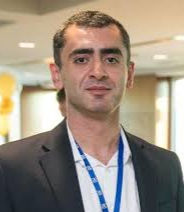
Dr. Sina Azodi is the Director of the Middle East Studies program at George Washington University, specializing in U.S.-Iran relations, nuclear nonproliferation, and Iranian foreign policy. He is a frequent commentator in international media and the author of the forthcoming book Iran and the Bomb: The United States, Iran and the Nuclear Question (2026), which traces the evolution of Iran’s nuclear strategy in the context of its fraught relationship with Washington.
Key Insights
1. The Islamic Republic is resilient by design, not by accident
This is a regime born in revolution, forged in an eight-year war with Iraq, and hardened by decades of sanctions and assassination campaigns. It has survived the killing of a sitting president, a prime minister, and cabinet members. That institutional muscle memory is showing: within five hours of Khamenei's elimination, Iranian forces began retaliating, compared to sixteen hours during the June 2025 escalation when the supreme leader was still alive. Before the first strike even landed, ministries had shifted to 50% capacity, schools had moved online, transit was made free, and every senior official had been ordered to appoint up to four deputies in case of a targeted killing. The system was built to absorb decapitation, and it did.
2. History offers no precedent for air campaigns producing regime change
From the firebombing of Germany and Japan to Rolling Thunder in Vietnam to NATO's campaign in Serbia, no bombing effort has ever, on its own, collapsed a government. Germany fell to ground forces. Japan surrendered under atomic strikes and the threat of Soviet invasion. Iraq's regime survived twelve years of bombardment and fell only to a full-scale ground invasion in 2003. The burden of proof is on those claiming Iran will be the exception.
3. Decapitation works against non-state actors, not states
Israel's strategy of systematically eliminating leadership worked against Hezbollah and Hamas because those are organizations, not governments. Remove a leader from a militia and confusion follows. Remove one from a state with a constitution, a succession protocol, and institutional depth, and the next person steps in. When Raisi died in a helicopter crash, a vice president took over and elections were held within 51 days. The same machinery activated after Khamenei. The Assembly of Experts has over a hundred members, making it nearly impossible to decapitate the succession process itself.
4. Ground troops would change the equation, but they are politically impossible
Azodi puts the probability at roughly 80% that without American boots on the ground, the regime survives. But a ground invasion is a non-starter in Washington. The tolerance gap is structural: the U.S. lost around 8,000 troops across two decades in Iraq and Afghanistan, and that was enough to turn public opinion. Iran lost 300,000 in eight years against Iraq and kept fighting. In Iranian strategic culture, mass sacrifice is an acceptable cost. In American domestic politics, it is terminal.
5. Survival, not political change, is the public’s immediate priority
Much of the population that opposes the Islamic Republic is currently focused on sheltering, fleeing major cities, and managing the immediate consequences of the conflict. Tehran is facing widespread strikes rather than precise targeting, and civilian casualties are increasing. People whose homes have been destroyed will likely depend on state assistance to rebuild, a dynamic that tends to reinforce reliance on existing institutions rather than fuel organized revolt. At the same time, the segment of society that remains loyal to the regime is ideologically committed and likely to reassert itself once the bombing subsides.
6. U.S. and Israeli war aims are diverging
Washington wants a compliant Iran, a regime that drops its nuclear ambitions, curtails missile development, and stops arming regional proxies. Israel wants a weak Iran, period. A former Israeli negotiator said publicly that the goal is not regime change but chaos, a distracted, fragmented Iran that cannot project power. Those two objectives are not the same, and the tension between them will define the political settlement, if one comes at all.
7. The most likely post-war outcome is a façade reshuffle, not transformation
The scenario Azodi considers most probable is a cosmetic leadership change, a more palatable figurehead installed while the IRGC runs the country from behind the scenes. The regime plays along with U.S. demands for three years, waits out the Trump administration, and then reverts. Iranian policymakers think in decades. American policymakers think in election cycles. That asymmetry is the regime's most reliable strategic asset. President Trump himself alluded to wanting a role in the succession process. Azodi's response: the IRGC will give Washington whatever face it needs, then outlast it.
8. Iran will not voluntarily surrender its missile or nuclear programs
Dismantling the missile program would leave Iran with no credible means of self-defense, the equivalent of dissolving its armed forces. A changed regime might negotiate on proxies and regional posture, as Iran attempted in its 2003 grand bargain offer, but the core deterrent capabilities are non-negotiable for any Iranian government, not just this one. And the knowledge cannot be bombed away: whatever regime follows this one inherits the engineers, the blueprints, and the industrial base.
9. The opposition is fragmented, compromised, and mistrusted
The MEK, an exiled Iranian opposition group that originally fought the Shah and later turned against the Islamic Republic, is universally despised inside Iran. The monarchist camp has been damaged by the Crown Prince's perceived subservience to foreign governments and by inflammatory rhetoric from exile figures threatening retribution against anyone associated with the regime. No organized opposition network exists with the infrastructure, credibility, or domestic support to fill a power vacuum. Attempting to impose a leader from the outside would trigger the deepest reflexes of Iranian nationalism.
10. Iran's regional strikes are calculated escalation, not panic
The targeting of UAE, Kuwait, and other Gulf states follows a deliberate logic: make hosting American military infrastructure costly. The UAE draws the heaviest fire because of its Israeli embassy, the longstanding dispute over three Persian Gulf islands, and its concentration of American assets. The escalation ladder, from missiles to tanker strikes to a Strait of Hormuz blockade to the attempted tactical bomber sortie against a U.S. base in Qatar, is sequenced, not improvised.
11. The war ends when the cost becomes unbearable for one side, and Iran's pain threshold is far higher than America's
Iran's strategy is not to defeat the United States militarily but to deny it a decisive victory, which Tehran would frame as a victory in itself. In a war of attrition, the U.S. will eventually prevail. But in the short term, Iran's institutional capacity to absorb punishment, and its population's historical tolerance for sacrifice, gives the regime a window that American domestic politics may not allow Washington to match. Iran lost 300,000 troops in eight years against Iraq and the country held together. The U.S. lost 8,000 over two decades in Iraq and Afghanistan and public support collapsed. Tehran is betting that Washington blinks first, and the longer the campaign drags without a defined political objective, the stronger that bet becomes.


Comments