


Iran's Social Unrest and the Future of the Regime

Updated: Jan 15
Thousands dead, internet blackouts, and a currency in freefall. When merchants in Tehran's upscale Monet Street shopping center closed their stores on December 28, 2025, they triggered something the Islamic Republic hadn't faced in its 46-year history: sustained, nationwide protests met with unprecedented brutality. With over 2,000 casualties, a collapsing economy, and an 86-year-old Supreme Leader whose refusal to compromise has left the regime with no exit strategy, Iran finds itself at a crossroads. On January 13, Wikistrat convened Iran experts Dr. Sina Azodi, Ahmad Hashemi, and Alex Vatanka to assess whether this time is different and what comes next
Webinar Recording

Dr. Sina Azodi
Director of the Middle East Studies program at George Washington University. Dr. Azodi specializes in Iranian politics and foreign policy, U.S.-Iran relations, and nuclear nonproliferation. He is the author of the forthcoming book Iran and the Bomb: The United States, Iran and the Nuclear Question (2026).

Ahmad Hashemi
Director of the Middle East and Central Asia Program at the Global Policy Institute (GPI). Former Foreign Ministry linguist, pro-democracy activist and freelance journalist in Iran.
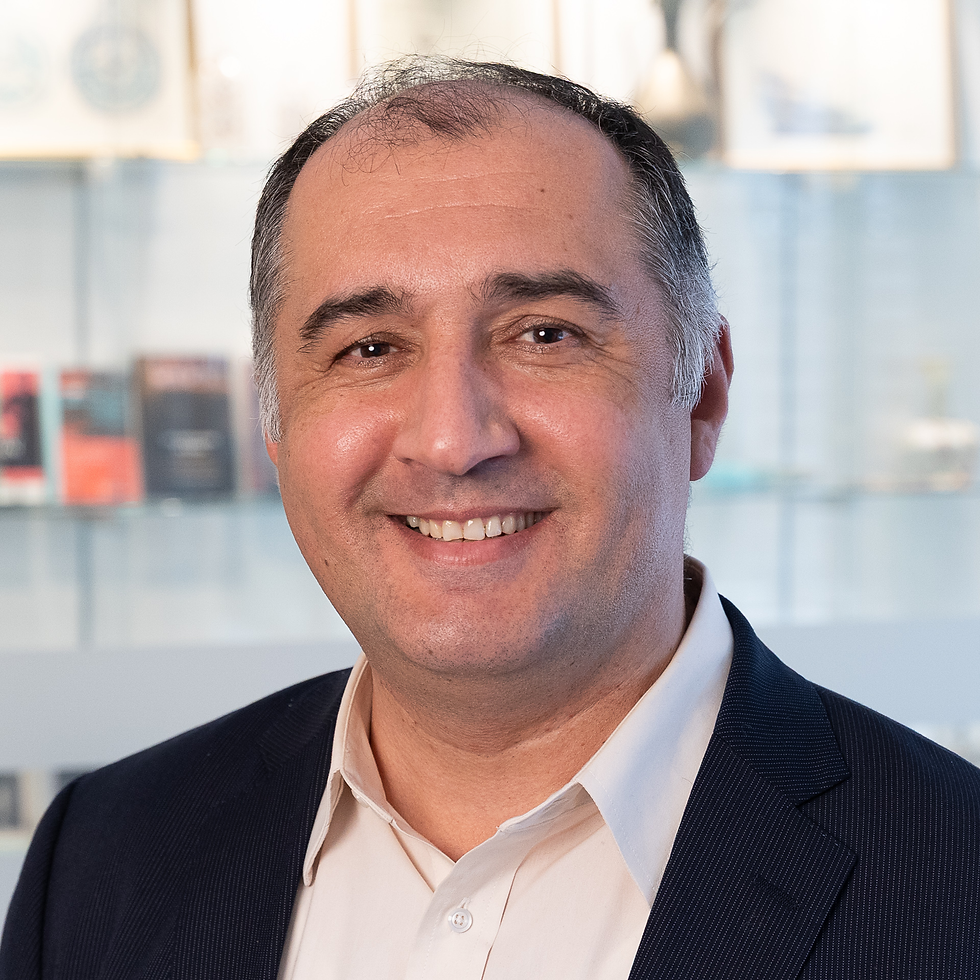
Alex Vatanka
Founding Director of the Iran Program at the Middle East Institute, where he also serves as a Senior Fellow. He specializes in Iranian domestic and foreign affairs, political-military relations, and Iran's relationships with the U.S., Gulf states, and Israel. He is the author of The Battle of the Ayatollahs in Iran (2021).
Full Report
Download full report:
Key Insights
1. The regime's survival instinct remains ruthlessly intact
The leadership faces an existential calculation: stay together or hang separately. Despite the scale of protests and economic collapse, there have been no significant defections from the top ranks of the Islamic Revolutionary Guard Corps or the political elite. The occasional viral video of a corporal pledging allegiance to opposition figures misses the point: "these are not the decision makers. They're mostly the draftees or perhaps you can see a junior officer," explained Dr. Azodi. The top brass views the unrest as a foreign-instigated plot that must be defeated at all costs, which explains why casualty numbers have reached levels extreme even by Islamic Republic standards. As Dr. Azodi noted, "the level of brutality is extremely high, even for the standards of the Islamic Republic." The regime has opted to kill its way out of this crisis, at least for now.
2. Iran's institutional depth makes this fundamentally different from the Arab Spring uprisings
Unlike Libya or Syria, Iran is not a colonial construction with artificial borders. As Alex Vatanka emphasized: "This is not some product of Colonial engineering. These borders you see are historical borders of a country that has a civilization going back 5,000 years." It's a nation-state with 5,000 years of civilizational continuity, where Azeris, Kurds, Arabs, and Persians have coexisted for centuries. The institutions undergirding Iranian society, from the bazaar merchant class to the clerical establishment to the vast bureaucratic apparatus, run far deeper than those in countries that collapsed during the Arab Spring. The Islamic Republic has spent nearly half a century embedding itself into every aspect of Iranian life. This isn't a regime that can be toppled with one push; it's a system that must be dismantled piece by piece, and doing so without triggering civil war or state fragmentation remains the central challenge.
3. The opposition is fragmented, leaderless, and divided along ethnic and ideological lines
There is no unified alternative waiting in the wings. The most visible figure, Crown Prince Reza Pahlavi, carries significant brand recognition among Persian Iranians and the diaspora in places like Los Angeles, where "he's 90%, he will get the votes," according to Ahmad Hashemi. But as Hashemi explained: "If we drive 200 miles away from Tehran, go to the ethnic heartland - no. I don't want to say zero popularity, but almost no, he's a despised person." For many non-Persians, the choice between the Islamic Republic and a Pahlavi restoration feels like choosing between two forms of dictatorship. Meanwhile, the People's Mojahedin Organization of Iran, or MEK, an Iranian leftist dissident organization, remains organized but commands only an estimated 1-2% of support inside Iran, as Vatanka noted. Secular republicans, reformists who still believe the system can be fixed, and ethnic movements each pull in different directions. Without a transitional framework that can accommodate this diversity, the opposition risks replicating the regime's own failures.
4. This may not be the end, but it's likely the beginning of the end
All three experts converged on a sobering consensus: the Islamic Republic is not collapsing imminently, but its structural decay is irreversible. As Vatanka put it: "Everyone knows the system is rotten. Even people presumably in Khamenei's inner circle, they recognize the system is rotten."
The question is no longer whether change will come, but when and how. Supreme Leader Ali Khamenei, at 86, shows no interest in reform: "He thinks God is on his side," observed Vatanka. But his inevitable death will remove the one figure holding competing factions together. The next round of protests is already baked in, driven by the same economic failures, energy crises, and legitimacy deficit that sparked this one. As Hashemi concluded: "I don't think the regime collapse is imminent... but I should say that this may not be the end of the regime, but it is the beginning of the end of the regime. No doubt about that."
5. Four scenarios define the range of possible futures
Continued repression with gradual weakening (High probability): The regime crushes protests but grows weaker, potentially reaching a limited deal with Trump to buy time. This means a paralyzed political structure and a deepening economic crisis without immediate collapse.
IRGC consolidation (Moderate-to-high probability): A quasi-coup where the Revolutionary Guards formally take control, keeping Khamenei as figurehead or moving beyond him after his death. Hashemi categorized this as "likely," considering "the harm's advanced age" and mounting pressure. This resembles Pakistan or Egypt's military dictatorships, but doesn't solve the legitimacy crisis.
Regime collapse (Low probability): The least likely near-term scenario. The least likely near-term scenario. No strikes in the oil sector, no transportation shutdowns, no organized coordination. The opposition remains too divided, and the repression machine shows no cracks at the top.
Fragmentation and civil war (Moderate probability): If the center cannot hold and ethnic grievances explode, Iran could descend into a Syria or Libya scenario. Hashemi described this as "not very likely now, but likely in coming months and years," depending on "how the international community, especially the United States, the Trump administration, with this unpredictability, reacts to this situation." This is the nightmare the regime uses to justify brutality and the fear that keeps some Iranians from pushing harder for change.
6. The IRGC isn't staging a coup; it already runs the country
Alex Vatanka frames the issue clearly: "IRGC has been running Iran for some time now. The idea that they take over means nothing. It is basically continuity." The Revolutionary Guards didn't wait for a crisis to seize power; they've been consolidating control for decades, taking over vast sectors of the economy, managing ballistic missile programs, and serving as the regime's enforcers both domestically and regionally.
The question isn't whether they'll take over, but whether they can reinvent themselves. The IRGC's legitimacy comes from protecting the 1979 revolution: "The word 'Iran' doesn't even appear in their name," noted Vatanka. If they pivot to focusing on Iranian national interests rather than exporting Islamist ideology, they might survive a post-Khamenei transition. But that would require a fundamental transformation of an institution whose identity is tied to the very system protestors are trying to dismantle.
7. Khamenei will never accept zero enrichment, but a temporary suspension is possible
When asked if Iran might capitulate on its nuclear program to survive, Dr. Sina Azodi was unequivocal: "Not as long as Khamenei is alive. He once told an Iranian ambassador you can stop enrichment under two conditions: when I die or if I resign." Those conditions won't be met voluntarily. However, Iran might agree to suspend enrichment during Trump's presidency, allowing both sides to claim victory: Trump gets to say Iran isn't enriching on his watch, and Tehran preserves what it calls its "right" to enrich. A permanent concession would require the kind of deal Iran couldn't refuse, similar to when the Shah accepted restrictions in the 1970s in exchange for most-favored-nation status on nuclear technology. But with Khamenei viewing the nuclear program as both a strategic deterrent and a matter of national pride, that deal isn't on the table.
8. External military intervention would backfire catastrophically
The Trump administration's "locked and loaded" rhetoric and speculation about Israeli strikes targeting regime leadership raise a dangerous question: would foreign intervention help topple the regime? The consensus among experts is clear: it would not. Hashemi noted that while "symbolically, if let's say the [Beit-e Rahbari], the Supreme Leader's Office is being targeted, or anything of that nature, the headquarters of IRGC would be useful," kinetic intervention would trigger the very "rally around the flag" effect the regime needs to survive.
It would validate the narrative that protests are foreign-orchestrated, alienate nationalist Iranians who oppose the regime but also oppose foreign interference, and risk pushing the country toward fragmentation rather than reform. Moreover, Western backing of specific opposition figures like Reza Pahlavi without broader consultation alienates non-Persian communities and reformists who see this as another form of external manipulation. Intelligence capabilities are better used to facilitate defections and create off-ramps for regime insiders than to launch missiles.
9. The opposition needs regime defectors more than it needs a single savior
The path to transition runs through people still inside the system. As Vatanka emphasized: "Not the top leadership: they have too much blood on their hands. But the bulk of the 170,000-190,000 IRGC members who joined for career opportunities, not ideology." Many are now wondering whether they want to be wearing that uniform when the ship finally sinks.
The challenge is creating an alternative that doesn't require them to choose between loyalty to a dying regime and becoming targets in a post-revolutionary purge. This is where figures like imprisoned reformist Mohammad Khatami could play a role: credible insiders who could offer a bridge between the old system and something new. The opposition, whether led by Reza Pahlavi or a coalition, must find ways to give regime members an exit strategy. Otherwise, fear of retribution will keep them fighting to the end, making the collapse more violent and the reconstruction more difficult.
Strategic Takeaways
The Islamic Republic has entered terminal decline but won't collapse imminently. The regime can kill its way through this crisis but cannot resolve the structural failures guaranteeing future unrest. Khamenei's succession will be the most dangerous moment in the republic's history.
Foreign military intervention or overt backing of specific opposition figures would backfire. Iran's transformation must come from within, navigating ethnic complexity and institutional depth that distinguish it from Arab Spring cases. The goal should be creating off-ramps for regime insiders, not triggering fragmentation.
Opposition fragmentation remains the fatal weakness. No single figure commands cross-ethnic support. As Vatanka noted: "This has come to Iran, and the Iranian people are not going to put up with it." The question is whether leaders can match the protestors' courage with strategic wisdom.
What the Next Year Could Look Like
Most Likely: The regime crushes protests through brutality but faces economic paralysis. Khamenei clings to power while the IRGC consolidates behind the scenes. Another wave erupts within 6-12 months.
Best Case Scenario: Mid-level defections accelerate as repression costs mount. Reformist regime factions open transition talks, creating a pathway beyond theocratic rule while keeping Iran intact.
Worst Case Scenario: Unrest spreads to oil and transport sectors. External intervention fragments the country along ethnic lines, triggering a multi-year civil war that reshapes the region.


Comments